The Trust Gap Shaping Pharma’s Future
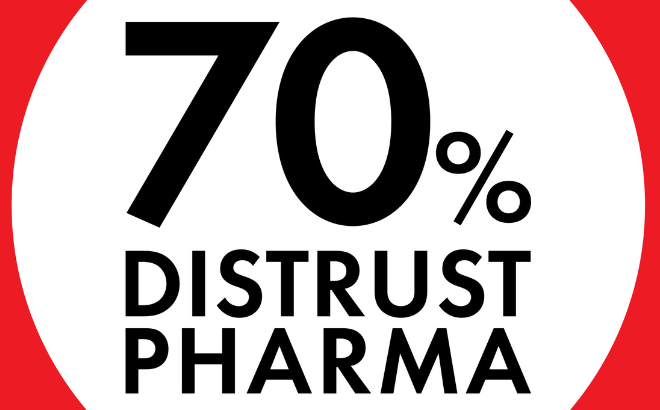
There’s a stat in our latest Fabric of Pharma report that stops people mid-sentence: 70% of Gen Z...


According to recent research by Cancer Research, the NHS is well below its targets for the time between diagnosis of cancer and first treatment. Only 68.8% of people in England received diagnosis and started treatment within the 2 months (or 62 days) standard.
Even more worryingly, the target of 85% has not been met since December 2015.
There is a view for prostate cancer specifically that it’s almost an inevitability for men who live to a certain age. After all, prostate cancer is the most common malignancy among older men. And some types of prostate cancer are so slow-growing that they don’t require immediate therapy.
But the fact remains for those who do require treatment, a mere 4-week delay has shown an increase in mortality rates across cancers by 6-8%. And currently, NHS urology departments are taking 46 days on average to reach a diagnosis. For patients desperate for answers, that’s a scary wait.
With an overburdened NHS, how are we to ensure that everybody who does need treatment for prostate cancer gets it in a timely fashion?
From “Online Hospitals” to “Same-day Diagnosis”
While staff resource is under short supply, it’s time for technology to step in to support.
Just recently, in January 2026, the UK Health Secretary Wes Streeting announced a new era for the NHS App. It will soon be able to offer fast-tracked video consultations with specialists, to reduce long waiting times. This feature will be targeted towards nine conditions with lengthy wait times – which will include prostate cancer, alongside menopause, IBD, and several eye conditions.
Patients will be able to have assessments, check-ups and follow-up appointments through the app, from its own dedicated team of doctors. Its goal is to hit 8.5m appointments within three years, quadrupling the average NHS Trust figures.
One NHS Trust is also pioneering a “game changer” AI trial for prostate cancer diagnosis. Leeds Teaching Hospitals NHS Trust is using AI technology to interpret MRI scans for areas of abnormal tissue within minutes. The software is called Pi, developed by Lucida Medical, and purports to spot 95% of cancers.
Scans flagged as high-risk will be triaged as a priority, followed by same-day biopsy. Best-practice guidelines state patients should receive an MRI and biopsy within a week of urgent referral but wait times can be longer. So in comparison, this new trial is a strikingly more efficient alternative.
One step closer to nationwide screening
Unlike breast cancer and cervical cancer, the NHS doesn’t currently run a screening programme for all men to check for prostate cancer.
However, in November 2025 the UK National Screening Committee (NSC) made a recommendation to start inviting men aged 45-61 with two specific gene changes for prostate cancer screenings every 2 years. These are BRCA1 or BRCA2 gene mutations which are linked to a higher probability of developing aggressive forms of prostate cancer. Best estimates suggest that these gene mutations affect between 1 in 400 to 1 in 300 people. Cancer Research UK have announced their support of this draft recommendation, saying that it is likely to “result in the best balance of harms and benefits compared to screening all men, men with a family history, or just screening Black men.”
Of course, there is more to the story to consider. The tests currently used in screening – Prostate Specific Antigen tests – have a number of limitations. Firstly, high PSA levels do not guarantee prostate cancer. They can be caused by recent exercise or ejaculation, infection, or simply older age. This can lead to men being referred for MRIs and even biopsies that they don’t need.
The PSA test is also known to produce false negatives by missing some prostate cancers, while increasing the chance of overdiagnosis of slow-growing cancers which do not always require surgery nor radiotherapy. These therapies can result in incontinence and impotence, so should not be carried out lightly.
Even so, in the absence of more reliable biomarkers, we also think this draft recommendation is a positive step towards tackling the problem of prostate cancer.
And on the note of whether PSA tests are the most reliable option available, that’s what the TRANSFORM trial aims to find out. A landmark £42m trial by Prostate Cancer UK is recruiting upwards of 300,000 men to compare fast MRI, PSA, and genetic testing, in hopes of finding a more accurate and efficient way than the current protocol.
A more holistic future?
It’s common to see social media posts purporting ‘cancer-busting diets’. Very few are backed by any kind of respected research, and can have disastrous effects for people who trade their radiotherapy or surgical interventions for an ‘alkaline diet’.
Having said that, fascinating research published in the European Urology Oncology journal seems to show that phytochemical-rich diets significantly slowed PSA increases in prostate cancer patients with low-risk tumours.
The fibre and prebiotic phytochemicals in foods like broccoli, turmeric, cranberries, green tea and ginger have long been known to be beneficial to the gut microbiome.
However, this randomized, double-blind, placebo-controlled trial demonstrates PSA progression significantly slowed, and markers of inflammation were reduced, for the cohort consuming 6 high phytochemical foods, and even more significantly for those also consuming Lactobacillus prebiotics. Urinary symptoms and erectile function showed improvement in both cohorts.
Though this study will need others to bolster dietary changes as slowing prostate cancer progression, it is exciting. Not least because it speaks to broader trends of patients taking a more active role in their care, and of approaching health issues holistically to complement medical treatments and overburdened health systems.
Speaking of which…
Breakthrough prostate cancer treatment
Treatments for prostate cancer, while often medically necessary and life-saving, nonetheless can bring some pretty difficult adverse events.
One pharmaceutical treatment for advanced prostate cancer is radioligand therapy (RTL). It’s a precision therapy that targets and destroys PSMA (prostate specific membrane antigen) cancer cells.
But this therapy can often cause such severe damage to salivary glands that patients choose to stop the treatment – suffering with an extremely dry mouth (xerostomia) that can stop them from drinking, eating, swallowing and even speaking. As such, it’s currently used as a ‘last-resort’ option.
But clearly, if patients are opting out of a life-saving measure, that adverse event must be taken seriously.
And a group of researchers from Case Western Reserve University in Ohio, USA certainly did.
Harnessing a molecule they’re calling PSMA-1-DOTA, they have found more effective binding characteristics than current options. DOTA works by affixing to radioactive metals – which allows those metals to connect to targeting compounds, which can help find or treat the cancer-causing cells.
Not only is PSMA-1-DOTA demonstrating 4x the binding strength, perhaps even more valuably it shows reduced salivary and tear gland damage. This suggests xerostomia could soon be a thing of the past.
A brighter future
While prostate cancer is still claiming too many lives, there are so many exciting developments that promise to revolutionise the state of play.
As you can tell, we’re passionate about prostate cancers and oncology more widely. If any questions have arisen while reading our blog, or you’d just like to have a chat, please get in touch.